Philippines wins the first Eurovision Song Contest Asia as Carmelle takes the crown in Bangkok
Nineteen-year-old Carmelle has won the first Eurovision Song Contest Asia for the Philippines, beating Thailand in a final in Bangkok that drew 11 countries.
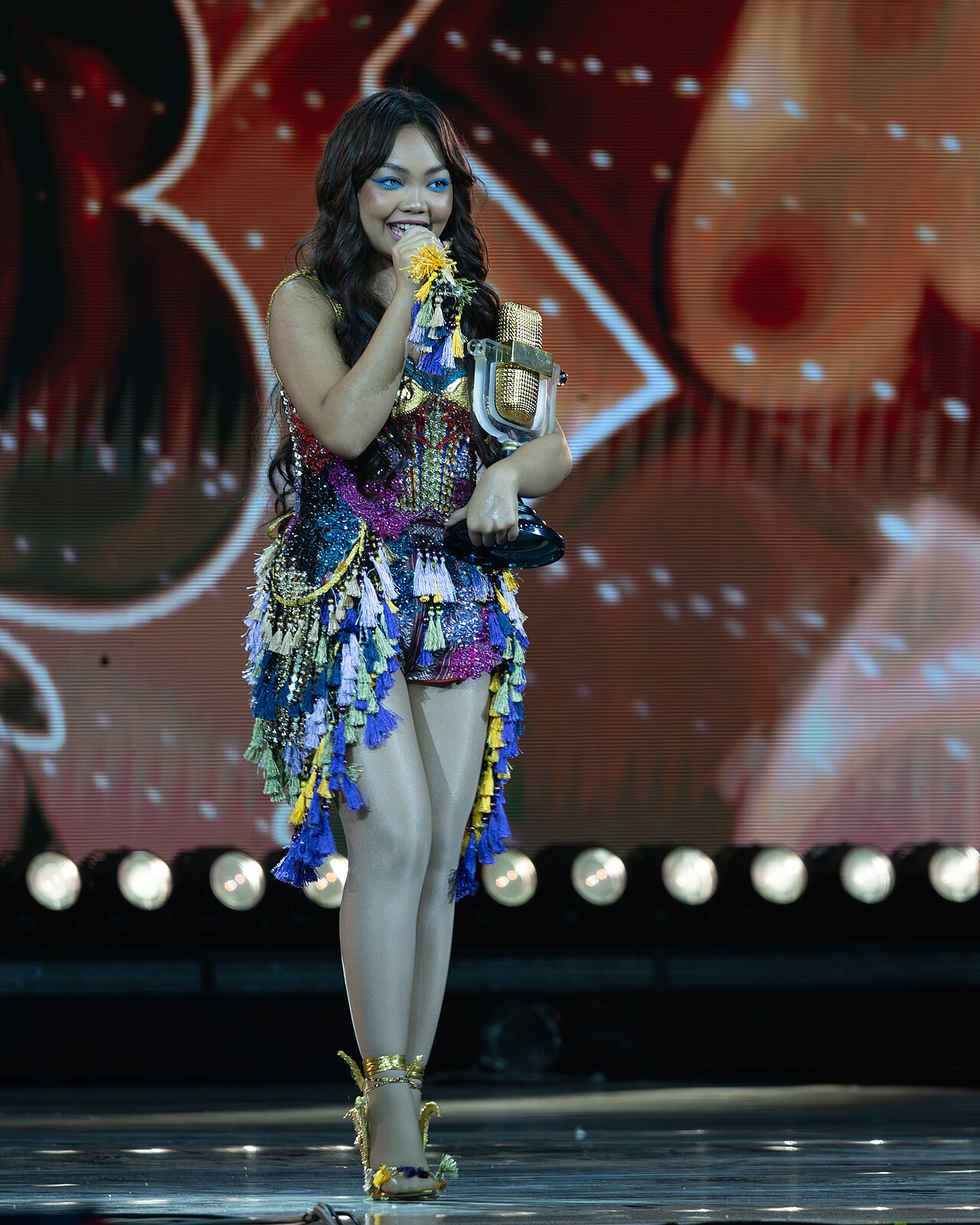
The Philippines has won the very first Eurovision Song Contest Asia, with 19-year-old Carmelle taking the crown in Bangkok with a women's empowerment anthem that won over both the juries and the public vote.
Carmelle, the youngest contestant in the competition, performed "Sobra-Sobra", a song built around a catchy rap section, and finished with 211 points in total: 93 from the jury vote and 118 from the public. Thailand's MANG x DAOU finished second with 170 points, ahead of Vietnam in third on 164.
The final, held at the One Bangkok Arena, brought together 11 countries in a contest that had been talked about for decades but had never actually happened until now. After many false starts, the Asian version of the world's biggest song contest finally took to the stage, and the Philippines will go into the history books as its first winner.
Fans who had travelled to Bangkok for the show described a night of high standards and big performances. One fan who had flown in from Scotland said she was very happy with Carmelle's win, while others praised the dancing, the sets, the costumes and the singing, calling the whole evening incredible.
A first for Asia
The idea of a Eurovision Song Contest in Asia has been discussed for decades, with many false starts along the way. The European original has run since 1956 and has grown into one of the largest live music events in the world, but efforts to export the format to Asia repeatedly stalled before a show could be staged.
This time it happened. Eleven countries took part in the first edition, and the arena in Bangkok was crowded, even if it was not completely full. The organisers will now have to decide whether the contest has enough support among regional broadcasters to return next year and to grow beyond its first 11 entrants.
For the contest's future, the first edition will be judged not only on its winner but on whether broadcasters across the region want to commit to it. The BBC reported that it is still not clear how much commitment there is among regional broadcasters to keep the contest going and to expand it beyond 11 countries.
How the voting worked
The voting worked much the same as in the European Eurovision. The public vote accounted for half of the result, and the other half came from the 11 national juries, with additional points from a rest-of-the-world vote added to the mix.
Carmelle's margin of victory was clear. Her 211 points put her 41 ahead of Thailand, and the split between her jury score of 93 and her public score of 118 showed that she won over both halves of the vote.
The final scoreboard read: Philippines 211, Thailand 170, Vietnam 164, Malaysia 152, Laos 139, Bhutan 126, Republic of Korea 113, Mongolia 94, Nepal 69, Cambodia 61 and Bangladesh 35.
Vietnam's representative, Toc Tien, finished third, giving the host region two of the top three places. Thailand, as the host nation's neighbour and the runner-up, also had plenty to celebrate, with its act MANG x DAOU winning praise for an emotive duet called "Aroma".
Other acts stood out for their originality. Bangladeshi beatboxers Beatmosphere used their voices to replicate drums and basslines instead of a backing track, while Laos's Thinla performed "Bae" in a traditional Lao hilltribe outfit. Her music video was also played over an apparent technical issue during the broadcast, making it the last song the audience heard before the vote.
A contest with a future still to prove
The guest performers underlined how seriously the organisers took the first edition. Dara from Bulgaria, the winner of the 2026 Eurovision Song Contest in Europe, performed her winning song "Bangaranga" and a new song, "Bad Idea". Thai superstar Jeff Satur also performed, singing "Black Tie" for the Bangkok crowd.
The evening was not without its problems. The arena was crowded but not full, and the technical hitch during the broadcast was a reminder that a first edition is always a test. But the performances themselves drew praise from the fans in the arena, who were confident enough about the contest's future to declare that "Asia Vision" should be the name for next year's show.
Whether that second edition happens, and how many countries take part, will depend on the broadcasters. A song contest needs television partners willing to pay for it and to send acts, and the first edition's modest scale suggests the organisers still have work to do to convince them.
For now, though, the Philippines has the trophy, Carmelle has a career-defining win at 19, and Asia has a Eurovision of its own at last. The question is whether the first contest in Bangkok becomes the start of a tradition, or a one-off that is remembered as a curiosity. The answer will come when the broadcasters decide whether to come back.