Democrat Jonathan Kreiss-Tomkins wins Alaska governor's race, AP projects
Democrat Jonathan Kreiss-Tomkins has won the race for governor of Alaska, according to the Associated Press, becoming the state's youngest governor and its first Democrat in the office since 2002.
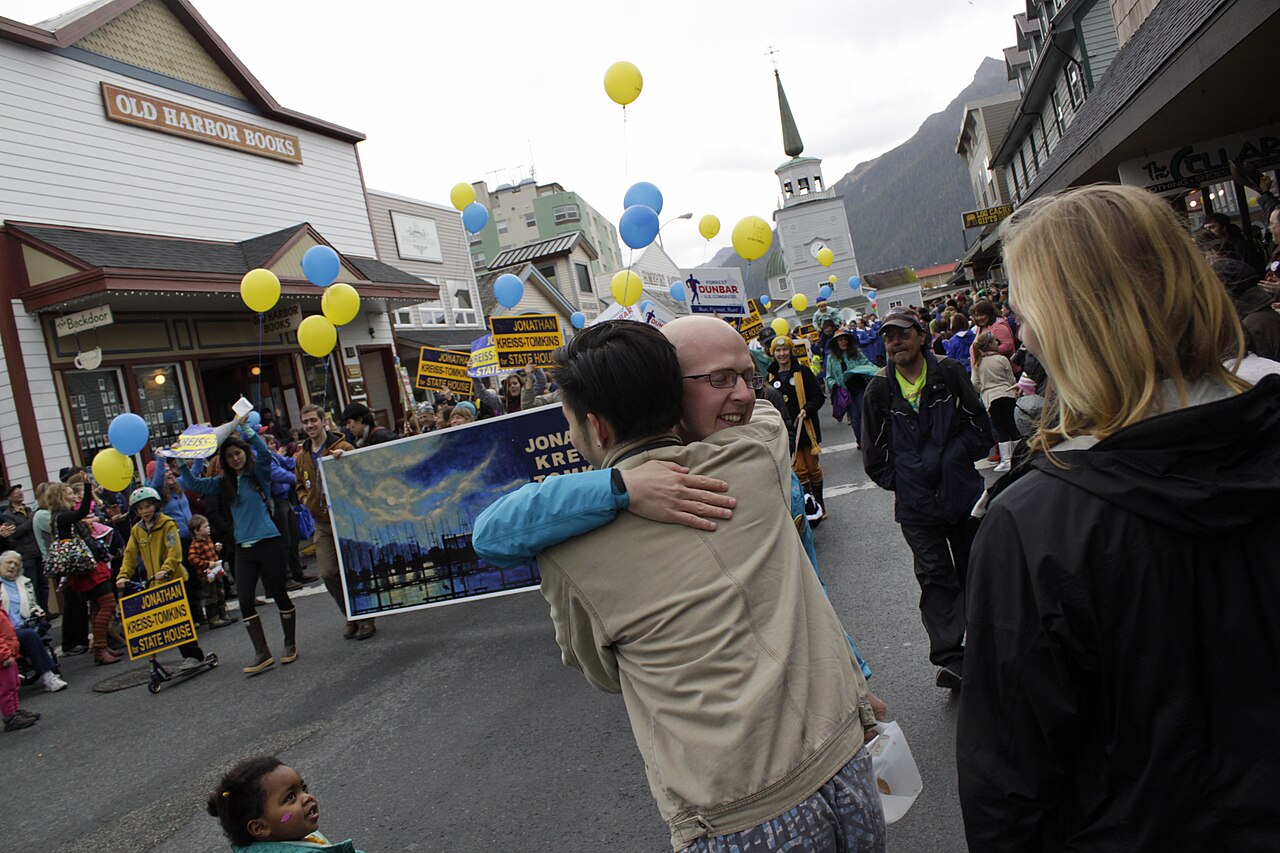
Democrat Jonathan Kreiss-Tomkins, a former state representative from the small island community of Sitka, has won the race for governor of Alaska, according to a race call by the Associated Press.
At 37, he will be the youngest governor in state history. He will replace outgoing Governor Mike Dunleavy, a term-limited Republican who has been governor since 2018. The state's last Democratic governor was Tony Knowles, who left office in 2002.
Mr Kreiss-Tomkins, known by his initials JKT, made his "high-energy, bipartisan, problem-solving approach" a centrepiece of his campaign. He has said he plans to build an administration of Democrats, Republicans and independents, and described himself at a debate as a "man of the middle".
He was endorsed by three former governors — a Democrat, a Republican and an independent — along with Republican Senator Lisa Murkowski. That breadth of support became the defining feature of his campaign: a Democrat running explicitly as a bridge-builder in a state where voters have grown tired of partisan fighting.
"Alaskans have had enough of zero-sum partisan politics," he said in an interview just before voting at a precinct in Anchorage on Election Day. "I strongly believe people just want things to work, and want people to work together."
The AP race call came after more than a week of counting votes, including those coming in by mail and from remote parts of the state. In the ranked-choice system Alaska uses, he faced three Republican candidates, including one backed by President Trump. Winning requires getting a majority of the votes.
The Republicans in the race were Trump-backed business owner Bernadette Wilson, former Anchorage Mayor Dave Bronson and former Alaska Attorney General Treg Taylor. Voters were also facing a question on the ballot about whether to scrap the ranked-choice system itself. That proposal failed, according to another AP race call, keeping the system in place.
A Democrat's win in a Republican-leaning state
With Mr Kreiss-Tomkins' win and others in the midterms, Democrats will hold 30 governors' offices across the country, up from 24 now. The Alaska result is the most striking of the cycle: a Democrat winning the governorship of a state that has voted Republican in every presidential election since 1964, and where the last Democrat left the governor's office nearly a quarter of a century ago.
His victory was built on an unusual coalition. The endorsements of three former governors from three different parties, and of Senator Murkowski — a Republican who has herself survived by building a cross-party coalition — gave his candidacy a credibility with voters who would not normally consider a Democrat.
The ranked-choice system also shaped the race. Voters rank candidates in order of preference, and if no candidate wins a majority outright, the lowest-ranked candidates are eliminated and their supporters' second choices are counted. Mr Kreiss-Tomkins' positioning as a "man of the middle" was designed for exactly that system: a candidate who could pick up second-preference votes from supporters of the other parties.
The failure of the ballot measure to scrap ranked-choice voting means the system that helped elect him will remain in place for future elections — a result that will be studied well beyond Alaska, as other states debate whether to adopt similar reforms.
The problems waiting in Juneau
Mr Kreiss-Tomkins will take office in a state where voters have loudly complained that things are not working as they should. Rising costs and relatively flat state funding have forced schools to close and class sizes to rise. Already-high costs for food, fuel and housing have risen sharply, and a looming shortage of easily accessible natural gas near the state's population centres is threatening to push prices higher. Alaskans have been migrating out of the state for more than a decade.
Those problems are the reason his campaign's central promise — that he would make government work — resonated. A governor who campaigned on competence will be judged on competence, and the school closures, the energy shortage and the cost of living are all problems that require money the state does not easily have.
The new governor's answer, at least in outline, is the administration he promised to build: Democrats, Republicans and independents working together, in the hope that a broader coalition can agree on solutions that a single party could not. It is the same approach that won him the election. Whether it can govern Alaska is the question that will define his time in office.
What comes next
For now, the result stands as one of the most surprising of the midterm cycle — a 37-year-old former state representative from Sitka, running as a bridge-builder, taking the governorship of a state that had not elected a Democrat to the office since 2002.