US floated Ukraine giving up Donbas in exchange for Nato membership, Zelenskyy says
Volodymyr Zelenskyy says US negotiators have raised the idea of Ukraine withdrawing from the Donbas in exchange for Nato membership — the first time the trade-off has been put to Kyiv.
US negotiators have raised the idea of Ukraine withdrawing its remaining forces from the eastern Donbas region in exchange for Nato membership, Volodymyr Zelenskyy has said.
The Ukrainian president's comments on Saturday come after US envoys visited Moscow and an EU summit in Dublin as part of ongoing efforts to end the war between Russia and Ukraine. It is the first time the trade-off has been put to Kyiv, Mr Zelenskyy said — and it revives a question Washington had previously taken off the table.
"The Americans raised a question: 'What if Ukraine joins Nato? Would Ukraine withdraw from Donbas?' This was the first time this had been raised," Mr Zelenskyy told reporters on Saturday.
Kyiv has long sought membership of the military alliance as a condition of any peace deal, seeing it as the only reliable deterrent against future attack. Russia, by contrast, has said another Nato member on its border is unacceptable. Mr Zelenskyy has also consistently said Ukraine was unwilling to give up sovereign territory, despite Moscow's demands that it cede the Donbas.
He went on to say that if he received a proposal that contained security guarantees, no constraints on Ukraine's military and funds to rebuild the country, he would put it to a referendum. US envoys Jared Kushner and Steve Witkoff travelled to the Irish capital on Thursday to meet Mr Zelenskyy, after a round of talks with Russian President Vladimir Putin in Moscow.
Comments by both Mr Putin and Kremlin officials suggest that Russia's position on the war has not shifted, and that Moscow's demands for territory and neutrality continue to far exceed what Ukraine is prepared to consider. Moscow has previously proposed limits on the size of Ukraine's military, territorial concessions and Kyiv's guaranteed neutrality as conditions of a peace deal. Ukraine has rejected these, arguing that such constraints would hamper its ability to stave off any future invasion.
What the Donbas means to both sides
Russia currently occupies roughly a fifth of Ukrainian territory, including most of the Donetsk and Luhansk regions that make up the Donbas. Ceding the small portions of land Ukraine still controls there would be symbolically significant for Kyiv, because it would amount to accepting that the Donbas is Russian.
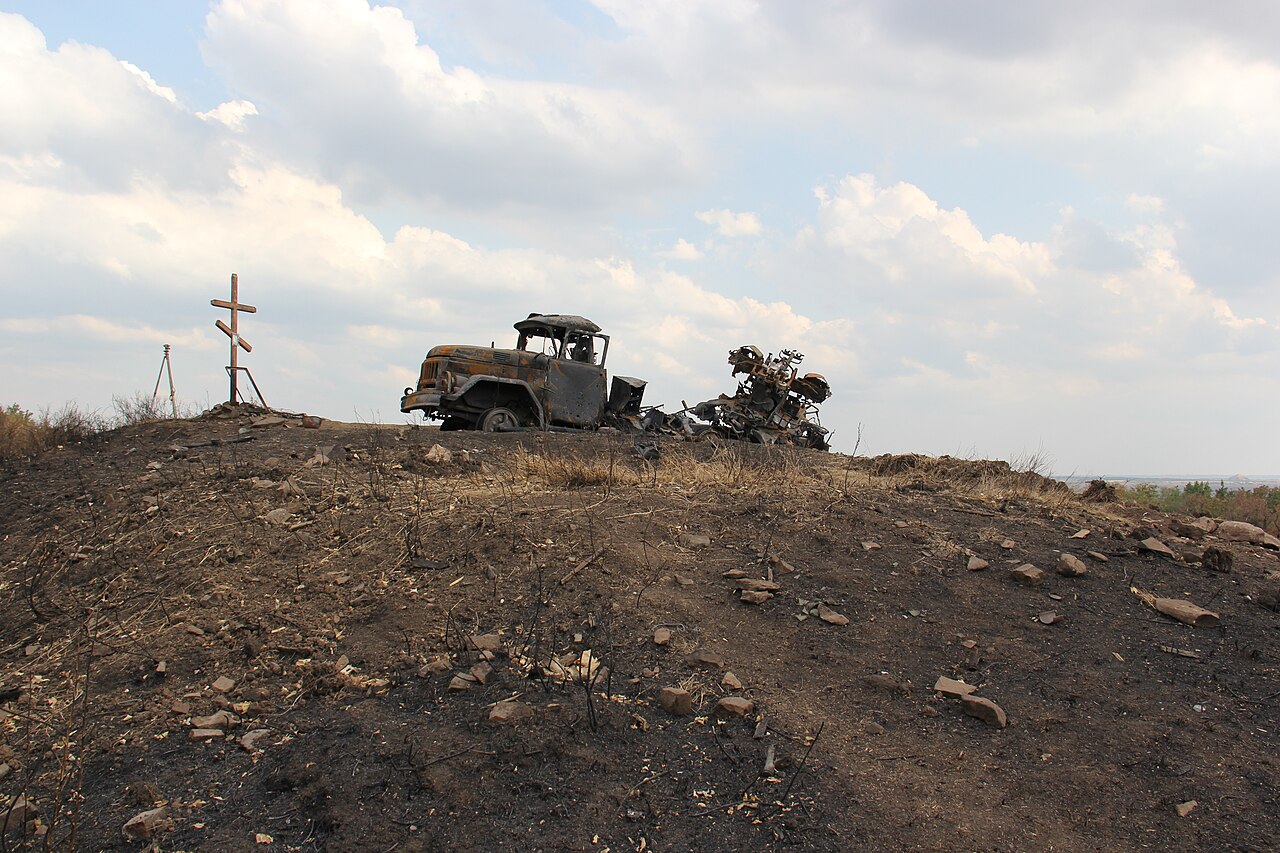
Mr Zelenskyy has previously spoken of retaking Russian-controlled territory in four of Ukraine's regions, as well as the Crimean peninsula, which Moscow annexed in 2014. The Donbas has been fought over since 2014, when Russian-backed separatists seized parts of it, and it has become the grimmest front of the full-scale war — a landscape of ruined towns and fortified lines that has changed hands slowly and at enormous cost.
That history is why the idea of trading the region for Nato membership is so sensitive in Kyiv. For Ukraine, Nato membership has always been the prize that would make a settlement worth accepting: a guarantee, backed by the alliance's collective defence, that Russia could not simply return. For Moscow, a Nato member on its border has always been the red line that would make a settlement unacceptable.
Mr Zelenskyy said on Saturday that the US proposal made him believe that "Nato is back on the agenda". But he cautioned: "You have also heard Putin's signals, and this is an extremely difficult conversation."
A fraught stretch for Kyiv and Washington
The latest round of talks comes after a period of strained relations between Kyiv and Washington. There have been disputes over Ukrainian strikes on oil facilities deep inside Russia, which US President Donald Trump had asked Ukraine to stop, and over a US deal to facilitate the supply of Russian diesel to ease global fuel prices, which have been rising since the US and Israel attacked Iran in February.
Mr Zelenskyy then accused US officials of limiting Ukraine's Starlink internet service, which it uses to co-ordinate defensive operations, while Mr Trump said it was "time for Ukraine to get a new president" and called for fresh elections. Elections are suspended while Ukraine remains under martial law, but Mr Zelenskyy has previously said he was willing to hold them within months of a peace deal being reached and would give up the presidency in exchange for Nato membership.
There have, however, been recent signs that the two sides can find common ground: last month, US First Lady Melania Trump was able to broker a temporary ceasefire in the Kherson region to allow for evacuations and aid deliveries.
US officials had previously said that Ukrainian Nato membership was off the table, and Mr Zelenskyy's disclosure suggests that position may be shifting. Whether the idea survives contact with Moscow is another matter. Russia's demands, as stated publicly, still include territory and neutrality far beyond what Kyiv would accept.
The road ahead
For now, the proposal exists as a question rather than a plan: what if Nato membership were on offer, in exchange for the Donbas? Mr Zelenskyy's answer — that he would put such a deal, with the right guarantees, to a referendum — leaves the decision with the Ukrainian people.