Teddy Riner, France's five-time Olympic judo champion, to run for president
Teddy Riner, France's five-time Olympic judo champion, has announced he will run for president, shaking up a race long seen as a contest between the hard right and the hard left.
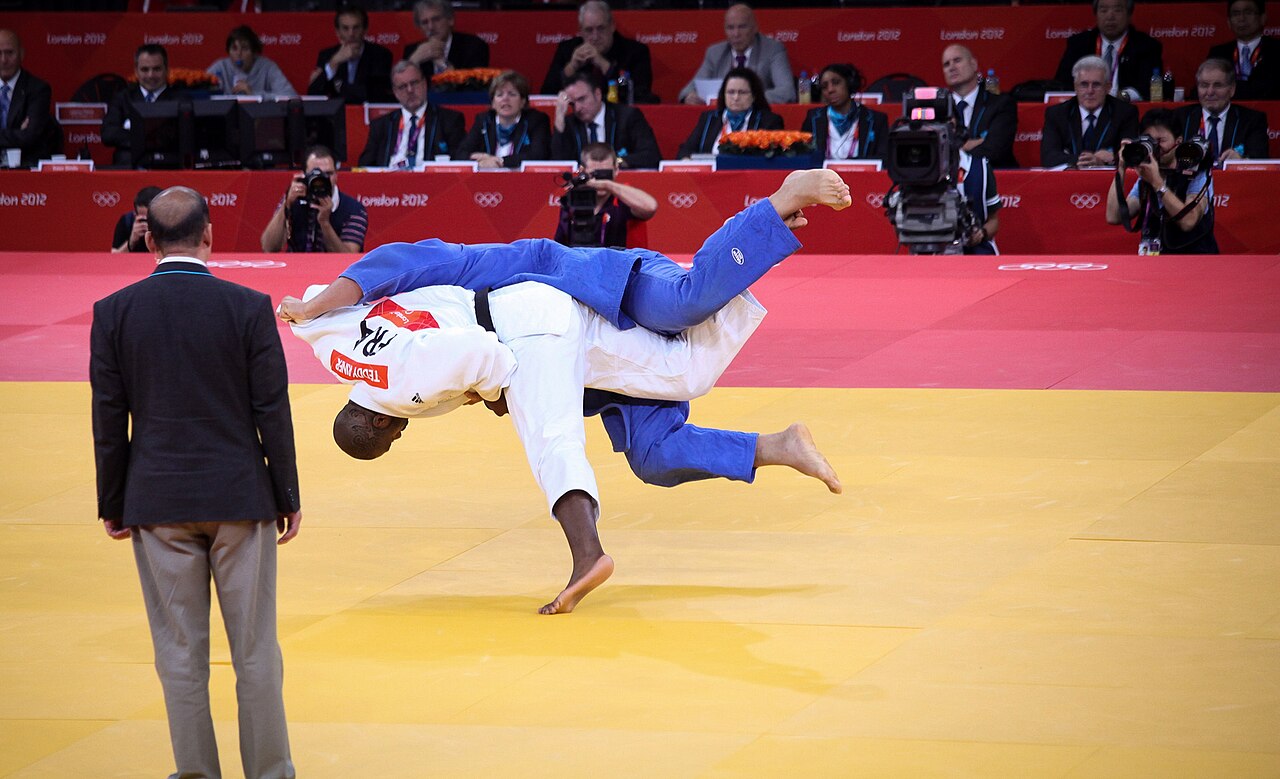
Teddy Riner, the most decorated judoka in history and one of the most popular figures in French public life, has announced he will run for president of France, shaking up a race that had seemed settled between the hard right and the hard left.
Riner, 37, was born in Guadeloupe and has won five Olympic gold medals and 11 world championships. He regularly tops polls asking which public figure best embodies the nation's values, and his entry into the race for next April's election, with the final round in May, has electrified a campaign that had been drifting towards a familiar conclusion.
He has no experience of public office, no party behind him and, as yet, no manifesto. What he has is a slogan, La France qu'on aime, the France we love, a declaration on social media, and a campaign visit to a hospital in the Seine-Saint-Denis suburb of northern Paris. More than 28 million people watched his election broadcast on Instagram and X, including 14.5 million views on Instagram alone, and 22 percent told an Ifop poll within 24 hours that they could vote for him.
His pitch is deliberately simple. He presents himself as neither left nor right, wanting to unite the country and put money back in people's pockets, railing against racists and yobs who scare people off the streets. In his broadcast he addressed the doubters head on, saying people called him a fool for wanting to run for the presidency, and answering that if refusing to watch France sink under the weight of debt counted as foolishness, then he was happy to be called a fool.
A champion with no party
Riner's appeal is rooted in a sporting career without parallel in French judo. He has dominated the heavyweight division for almost two decades, winning Olympic titles across four Games and world championships with a consistency that made him a household name far beyond the sport.
That fame gives him something no other candidate can claim: instant recognition and a reservoir of goodwill built over years of representing France on the world stage.
The BBC describes him as broadly on the right on economic matters and law and order, but strong on racism, with his opposition to extremism aimed mainly at Marine Le Pen.
Whether goodwill can be turned into votes is another matter. He has no party machine to gather the signatures he will need to stand, and no experience of the grinding work of a presidential campaign.
President Emmanuel Macron, who cannot stand again, called Riner a great champion and said politics did not belong to the professionals. Riner said on Saturday that he viewed the president's praise as a poisoned chalice, insisting he was not the president's envoy and not a Macronist.
A crowded and unsettled race
Riner enters a race that is already crowded and deeply unsettled. Marine Le Pen, the hard-right leader, currently leads the polls, with Jean-Luc Mélenchon on the hard left looking set to face her in the final round. The centre, which has governed France for the past decade, is in disarray.
About a dozen candidates are competing between the centre-right and the centre-left, including former prime ministers Edouard Philippe and Gabriel Attal, the Socialist-backed Raphaël Glucksman and the Republicans' Bruno Retailleau. Christine Lagarde, who steps down as head of the European Central Bank next February, is talked about as a possible addition.
Into this fragmentation steps a candidate who owes nothing to any of the factions. Le Figaro's Guillaume Tabard wrote that anyone who thinks being outside the political in-crowd disqualifies Riner would be very wrong, but that Riner would be equally wrong to think that alone is enough.
Mélenchon was quick to dismiss the new challenger, saying on Friday that neither right nor left means not left. It was a reminder that the established candidates will not give ground easily, and that Riner will face sustained attack from all sides as his campaign develops.
Can a judoka win the Elysee?
History offers little guidance. France has never elected a president with no political experience at all, and voters have traditionally punished candidates who seem unprepared.
Yet the mood in France is unusually open to an outsider. Trust in the political class is low, the traditional parties are weak, and the prospect of a final round between Le Pen and Mélenchon alarms a large part of the electorate. In that context, a candidate who can present himself as above the fray has a real opening.
The next test will be practical. Riner must gather the 500 signatures from elected officials required to stand, build a campaign organisation from nothing, and publish a programme that survives scrutiny. The 22 percent in the Ifop poll is a measure of curiosity as much as support.
For now, the man who has spent his life throwing opponents to the mat has thrown the French presidential race into confusion. Whether the discipline and composure that made him a champion translate to a contest against an entire political system is the question.