More than 100,000 take to the streets as Yellow Vest protests return in France
More than 100,000 people marched across France as Yellow Vest and student protests returned, with unions calling a new strike day on the movement's eighth anniversary.
More than 100,000 people have taken to the streets across France in a fresh round of cost-of-living protests organised by the Yellow Vests and youth movements, in a wave of unrest that has now gripped the country for more than a month.
The interior ministry said 106,000 people took part in demonstrations nationwide on Saturday, including 24,000 in Paris. That was down from 146,000 nationwide and 46,000 in the capital a week earlier, according to the ministry's figures. Student unions put Saturday's turnout higher, at 200,000 people across the country, including almost 100,000 in Paris.
Protesters chanted against declining affordability, the government of President Emmanuel Macron, police violence and poor school conditions. Many demonstrators carried signs aimed directly at the president, who has faced sustained criticism from the movement since it first emerged eight years ago.
The protests stayed largely calm, the authorities said, although clashes were reported in several cities, and the weekend's marches were the latest in a rolling campaign that has combined high-school blockades, mass demonstrations and strikes.
A month of blockades and strikes
France has been gripped by protests for more than a month, with demonstrators rallying against falling educational standards, rising living costs, low wages and police violence. High schools have been blockaded, unions have staged strikes, and weekend marches have become a regular fixture in cities across the country.
Some rallies in recent weeks have seen violence at the fringes, and the first major protest on 17 October saw looting in cities across France. Since then, the police presence at rallies has been expanded, along with controls on transport and on permits to protest.
The grievances on display on Saturday were broad. Students marched over conditions in schools and universities, workers over wages that have not kept pace with prices, and Yellow Vest activists over a cost of living they say has become unmanageable. What unites them is a sense, voiced again and again on the marches, that the government has not listened.
Clashes in Marseille and Lyon
Marseille, France's second-largest city, banned protests over the weekend, but the prefecture said some 3,500 people still took to the streets. Local media reported that tear gas and a water cannon were used against protesters, and shared images of fires burning in a popular local square.
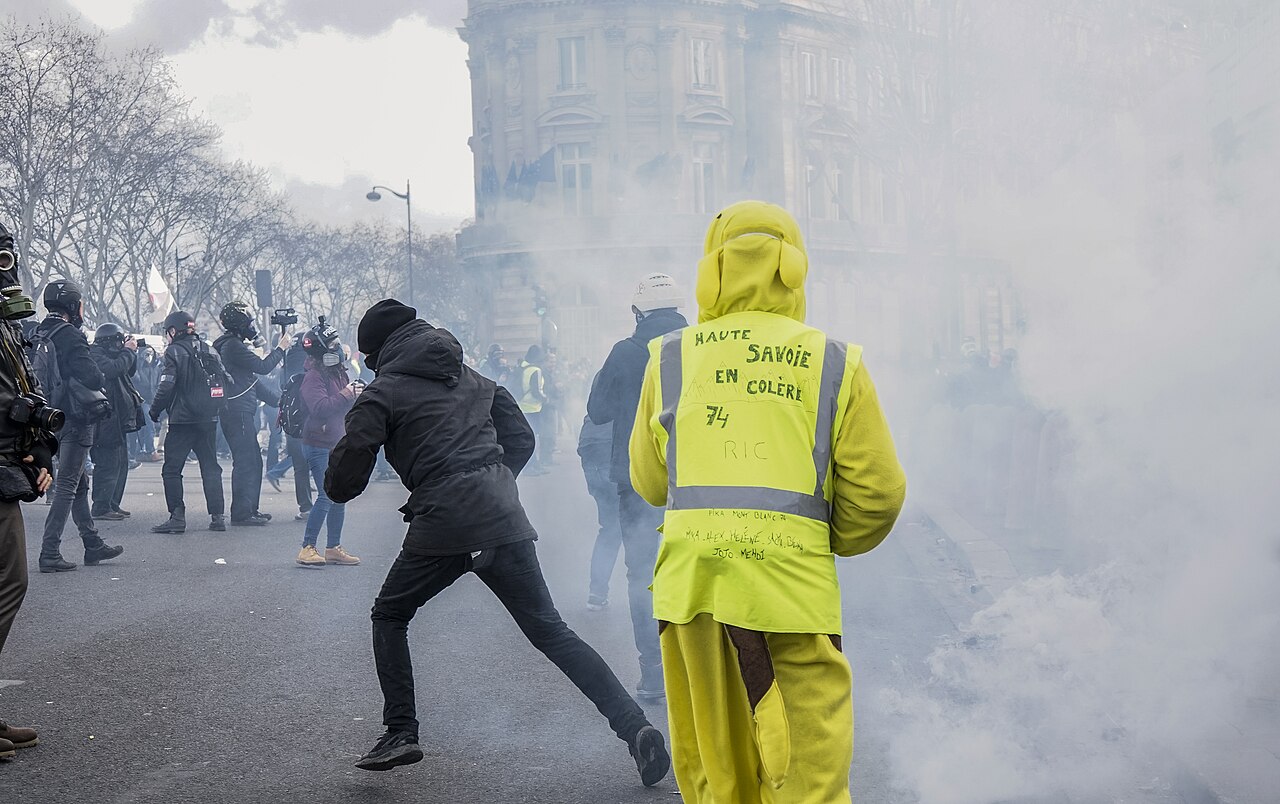
In Lyon, local media reported that roughly 8,000 people marched. Images from the city showed masked protesters chanting in front of fires lit in the street, with police charging and using tear gas to push the crowds back.
Tear gas was also reported in Nantes, Bordeaux and Paris, where officers moved against groups of protesters as the marches wound through the city centres. The authorities said the day remained largely peaceful overall, with the confrontations concentrated in particular neighbourhoods rather than spreading across the demonstrations as a whole.
The use of tear gas and water cannon has itself become one of the protesters' complaints. Police violence was listed among the reasons people gave for marching on Saturday, and the images of officers firing tear gas into crowds are likely to feature in the arguments made by both sides in the days ahead.
For the government, the policing of the protests is a balancing act: allowing lawful demonstrations to go ahead while preventing the kind of looting seen on 17 October. For the protesters, the heavy police presence is evidence that the state would rather contain their anger than answer it.
A symbolic date approaches
Unions have called for a new day of strikes on Tuesday, after rejecting a government promise to increase the minimum wage by 0.6 per cent as "crumbs". If the demonstrations go ahead, they will take place on the eighth anniversary of the Yellow Vest movement, which rocked the start of the Macron government in 2018 with two years of protests triggered by rising fuel prices.
On Tuesday, the Yellow Vests will "celebrate their eight years where it all started: on roundabouts and toll booths all over France", according to the protest tracking website 17octobregiletjaune.net.
The anniversary gives the movement a natural focal point. Eight years ago, the yellow high-visibility vest became the symbol of a revolt that began over fuel prices and grew into a broader challenge to the president and his government. The fact that the same symbol is back on the streets, carried by a new generation of students alongside the original activists, suggests the grievances that created it have not gone away.
Whether Tuesday's strikes draw bigger crowds than Saturday's marches will be the next test of the movement's strength. The unions are betting that the anniversary, combined with anger over the minimum wage offer, will bring people out. The government, for its part, will be hoping that the falling turnout on Saturday is the start of a trend, and that the protests fade as winter sets in. Neither side can be sure which way it will go.